
Blog posts
-

Wholesale vs Retail Fastener Pricing: What Contractors Need to Know
Wholesale vs Retail Fastener Pricing: What Contractors Need to Know -


Self-drilling screws drill their own pilot hole, while self-tapping screws need a pre-drilled hole. Learn which sheet metal screw type is best for your project.
Anyone who works with sheet metal, whether on a construction site or in a home workshop, eventually faces the choice between self-drilling and self-tapping screws. The two types look similar at first glance, but their applications differ significantly. Self-drilling screws can drill their own pilot hole and cut their own threads as they are driven. Self-tapping screws can only cut their own threads and require a pre-drilled pilot hole before installation. Understanding this core difference helps you pick the right fastener for the job, saving time and preventing material damage.
Self-drilling screws, often called Tek screws, feature a drill-bit shaped tip. This tip allows the screw to create its own pilot hole as it is driven into the material. Once the hole is formed, the screw continues to tap threads into that hole, securing the fastener. Because no separate drilling step is needed, self-drilling screws can cut installation time in half. However, they require higher driving torque than self-tapping screws, and a steady hand is necessary to avoid wobble. If the screw wobbles during driving, it can create an oversized hole that reduces holding strength. Self-drilling screws are commonly used for fastening thin sheet metal to metal or to wood, and they work well in applications where speed is a priority.
Self-tapping screws are designed to cut their own threads as they are driven into a pilot hole. They cannot drill through metal on their own, so a pre-drilled hole of the correct size must be made first. Self-tapping screws come in different types. Type A self-tapping screws are identical to wood screws except they are fully threaded, with coarse threads that provide strong grip in softer materials. Type AB self-tapping screws have finer thread spacing than Type A and are often preferred for thin or brittle materials where coarse threads might cause cracking. Because self-tapping screws do not drill, they can be installed with less torque than self-drilling screws. They are also useful in tight spaces where a hex driver cannot fit, since a standard screwdriver or bit can be used in many cases. For thicker metal applications, self-tapping screws are generally recommended.
| Feature | Self-Drilling Screws | Self-Tapping Screws |
|---|---|---|
| Pilot hole required | No – they drill their own pilot hole | Yes – a pre-drilled pilot hole is necessary |
| Drilling ability | Can drill through metal without pre-drilling | Cannot drill; only cuts threads into existing hole |
| Thread cutting | Yes – also taps threads as they are driven | Yes – cuts threads into the pilot hole |
| Installation speed | Faster – eliminates separate drilling step | Slower – requires pilot hole drilling first |
| Driving torque | Higher torque needed | Lower torque required |
| Risk of wobble | Can wobble if not driven straight, causing oversized hole | Less wobble since pilot hole guides the screw |
| Best for material thickness | Works well on thin to moderate thickness sheet metal | Recommended for thicker metal; also works on thin metal |
| Common types | Often called Tek screws | Type A (coarse threads), Type AB (finer threads) |
The decision between self-drilling and self-tapping screws depends on the specific requirements of your project. If you are working with thin sheet metal, either type can work, but self-drilling screws will save time because you can skip the pilot hole. If your application involves thicker metal, self-tapping screws are the better choice because they rely on a precisely sized pilot hole and can handle the increased thickness without the wobble issues that can plague self-drilling screws in dense material. For tight spaces where you cannot fit a hex driver or a drill, self-tapping screws are easier to install with a manual screwdriver. If speed is your primary concern and you are working on a large job where every second counts, self-drilling screws cut installation time roughly in half. Keep in mind that self-drilling screws require more torque from your drill and a steady hand to keep them straight, so practice on scrap material first if you are new to using them.
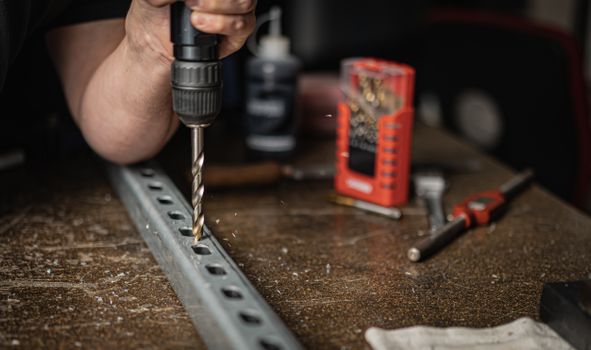
Self-drilling screws can drill their own pilot hole using a drill-bit-shaped tip, so no pre-drilling is needed. Self-tapping screws can only cut threads and require a pre-drilled pilot hole before installation. Self-drilling screws also tap threads as they drive, while self-tapping screws cannot drill through metal without an existing hole.
In standard practice, self-tapping screws require a pilot hole to function properly in metal. While they may start in very soft materials without a pre-drilled hole, the intended use is to drive them into a prepared hole where they cut their own threads. Attempting to force a self-tapping screw into metal without a pilot hole can damage the screw or the material.
Strength depends on the specific screw material, thread design, and application rather than on whether the screw is self-drilling or self-tapping. Both types are available in various grades and sizes. The choice between them should be based on installation requirements and material thickness, not on an assumption of inherent strength differences.
Self-drilling screws can be installed with a standard variable-speed drill or impact driver. Because they require higher driving torque than self-tapping screws, a drill with good torque control helps prevent cam-out or stripping. A steady hand and consistent speed are important to avoid wobble, which can create an oversized hole.
Yes, Tek screw is a common term for self-drilling screws. The name originated as a brand but is widely used to describe any self-drilling screw with the characteristic drill-bit tip. When you hear someone refer to Tek screws, they are talking about self-drilling screws that do not require a pilot hole.
Choosing between self-drilling and self-tapping sheet metal screws comes down to understanding your material thickness, the tools you have available, and the speed you need. Self-drilling screws offer convenience and time savings for thin to moderate gauges, while self-tapping screws provide reliable thread engagement in thicker metal when a pilot hole is drilled correctly. Both types have their place in a well-stocked fastener kit, and knowing the difference helps you make the right selection every time.

