
Blog posts
-

Wholesale vs Retail Fastener Pricing: What Contractors Need to Know
Wholesale vs Retail Fastener Pricing: What Contractors Need to Know -


Compare flat head vs round head wood screws: countersink vs exposed head, pre-drilling needs, aesthetics, and best use cases for your project.
Choosing the right wood screw head is a small decision that makes a big difference in how a finished project looks and performs. Flat head and round head screws serve different purposes, and understanding their design is the first step toward picking the correct fastener. The main distinction comes down to how each type sits against the surface of the wood.
A flat head screw has a tapered underside that allows it to sit flush with the wood surface when driven into a countersunk pilot hole. In the United States, standard flat head wood screws are manufactured with an 82-degree head angle, while metric flat head screws typically use a 90-degree angle. Round head screws, on the other hand, have a smooth, half-circle profile that sits above the wood surface. They lack the tapered shank of a flat head, so they rest on top of the material rather than sinking into it.
Flat head wood screws are designed to be countersunk. The tapered underside of the head mates with a matching countersink hole, pulling the head flush or slightly below the surface. This makes them an excellent choice when you want to hide the fastener or create a smooth surface for a bung or wood filler. If the screw head ever becomes damaged, a flat head screw can often be recut in place, making it a practical option for repairs.
Round head wood screws have a domed top that stays above the wood. Because they lack the tapered shank, they sit against a flat surface without requiring a countersink. This makes them faster to install in many cases, and they are often chosen when the screw head is meant to be seen as a design element. They are also commonly used when attaching thin materials where a countersink would weaken the piece, or when the hardware being fastened has non-countersunk holes.
| Feature | Flat Head Screw | Round Head Screw |
|---|---|---|
| Surface profile | Sits flush with surface | Protrudes above surface |
| Countersinking | Designed for countersinking (tapered underside) | No countersinking, sits on top |
| Typical use | Hidden fastening, clean finish, bung covering | Exposed fastening, decorative, thin materials |
| Pre-drilling needed | Recommended, especially in hardwoods | Often not necessary |
| Ease of removal | More difficult due to countersunk position | Easier since head is above surface |
| Head angles (standard) | 82° US, 90° metric | Not standardized in same way; varies by manufacturer |
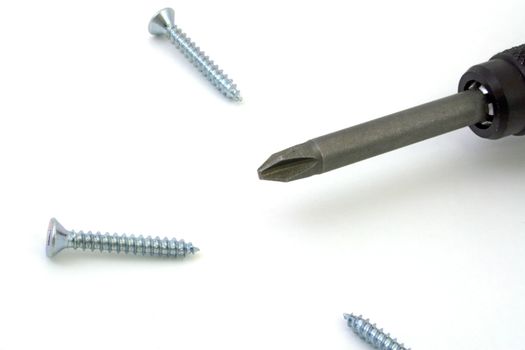
Flat head wood screws are the go-to choice when appearance matters and you want the fastener to disappear into the work. They are ideal for cabinetry, furniture assembly, trim work, and any application where the surface will be painted, stained, or filled. The flush finish prevents snagging and allows for a smooth sanding surface. Because they require a countersunk pilot hole, they add an extra step to installation, but the result is a professional look.
Another common use is in boatbuilding and outdoor projects where bungs are inserted over the screw head to seal and protect it. The flat head design provides a recess that holds the bung securely. Pre-drilling is strongly recommended for flat head screws in hardwoods to prevent splitting and ensure the head seats correctly.
Round head wood screws are the practical choice for speed and accessibility. Since they do not need a countersink, you can drive them directly into the wood, saving time on installation. This makes them popular for framing, decking, and other structural work where the fastener head is not a concern. They are also used in hardware attachment, such as mounting hinges or brackets that have pre-drilled non-countersunk holes.
Because the head sits above the surface, round head screws are easier to remove or tighten later. This is helpful for temporary assemblies or projects that may need disassembly. They can also serve a decorative purpose when the domed head is left exposed, adding a mechanical or industrial look to a piece.
Proper installation helps both flat head and round head screws perform well. For flat head screws, always drill a pilot hole and a countersink that matches the screw’s head angle (82 degrees for most US standard screws). Test the countersink depth on scrap material first to ensure the head sits flush. For hardwoods, you may also need to drill a clearance hole for the shank to prevent binding.
Round head screws are more forgiving. A pilot hole is still a good idea in dense or brittle wood to avoid splitting, but it does not need to be countersunk. Simply drill a hole slightly smaller than the screw diameter and drive the fastener. Because the head sits above the surface, you have easy access for a screwdriver or drill bit, and removal is straightforward.
It is not recommended. Round head screws lack the tapered underside needed to seat into a countersink. The head will sit above the counterbore instead of flush, and the edges of the countersink may lift or chip. If you need a flush finish, use a flat head screw with the correct countersink.
There is no universal standard that declares one head type stronger than the other. One source suggests round head screws may offer more strength due to their higher profile, but this is not a widely agreed upon engineering fact. The strength of a wood screw depends more on its diameter, thread design, material grade, and the wood itself than on head shape. Choose based on application requirements rather than perceived strength.
Pre-drilling is strongly recommended for flat head screws, especially when working with hardwoods. The tapered underside can create a wedge action that splits the wood if no pilot hole exists. In softwoods, you may sometimes drive a flat head screw without pre-drilling, but results vary. For best results, always drill a pilot hole and countersink.
Yes, round head wood screws can be used outdoors if they are made from a corrosion-resistant material such as stainless steel or have a weather-resistant coating. The exposed head may collect moisture around it, so choosing a coated or non-corroding screw is important for longevity. Flat head screws with a bung cover are another common method for outdoor work where the fastener must be sealed.

