
Blog posts
-

Wholesale vs Retail Fastener Pricing: What Contractors Need to Know
Wholesale vs Retail Fastener Pricing: What Contractors Need to Know -


Compare wedge and sleeve anchors for heavy loads. Learn load capacities, installation speed, material suitability, and which anchor type works best for concrete, brick, and block.
Choosing the right concrete anchor for a heavy load application can determine the safety and longevity of the installation. Two common mechanical anchors are wedge anchors and sleeve anchors. While both are designed to secure objects to masonry, they have distinct differences in load capacity, material compatibility, and installation requirements. This article compares wedge anchors vs sleeve anchors to help you decide which one is stronger and more suitable for your heavy-load projects.
Wedge anchors are a type of expansion anchor designed specifically for use in solid concrete. They consist of a threaded stud with a cone-shaped expander plug at the bottom. When the nut is tightened, the expander is pulled up against a sleeve, forcing the sleeve to expand outward and grip the concrete. Wedge anchors are known for their high load capacity, typically supporting up to 6000 lbs or more, making them a common choice for heavy-duty applications such as structural supports, machinery mounts, and safety barriers. However, they require precise hole size and accurate torque during installation, and the concrete must be fully cured for at least 28 days before installation.
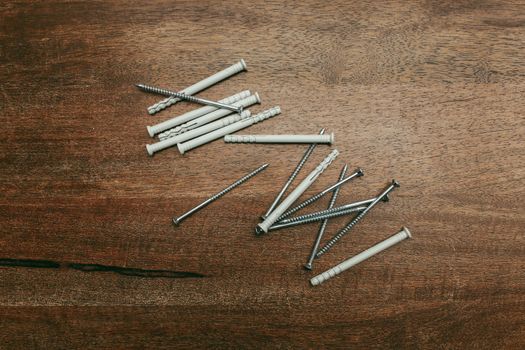
Sleeve anchors are versatile expansion anchors suitable for a variety of base materials including concrete, brick, block, and hollow masonry. They can even be used in drywall for lighter applications. A sleeve anchor consists of a threaded stud surrounded by an expandable sleeve with a cone-shaped nut at the bottom. As the nut is tightened, the sleeve expands against the walls of the pre-drilled hole. Sleeve anchors are easier and faster to install than wedge anchors, often taking 2–3 minutes per anchor compared to 5–10 minutes for wedge anchors. They support medium loads in the range of 200–1000 lbs, making them ideal for light-to-medium duty applications such as shelving, handrails, and conduit supports. Sleeve anchors are generally less expensive than wedge anchors.
Wedge anchors are designed for solid concrete only. They should not be used in brick or block, as these materials cannot withstand the expansion forces and may crack. Sleeve anchors, on the other hand, are suitable for concrete, brick, block, hollow masonry, and even drywall for lighter loads. This makes sleeve anchors a more flexible option when the base material varies across a project.
Load capacity is the most significant difference between the two anchors. Wedge anchors offer high load capacity, typically supporting up to 6000 lbs or more, depending on the diameter and installation quality. Sleeve anchors support medium loads, generally in the range of 200 to 1000 lbs. For heavy loads requiring maximum strength in solid concrete, wedge anchors are the stronger choice. For medium-duty applications, sleeve anchors provide sufficient strength at a lower cost.
Installation differences are notable. Sleeve anchors are faster and easier to install, taking about 2–3 minutes per anchor. They have more tolerance regarding hole size, making them more forgiving for less experienced installers. Wedge anchors require precise drilling and careful torque application, with installation times of 5–10 minutes per anchor. If speed and ease are priorities, sleeve anchors are the better option.
Sleeve anchors are generally less expensive than wedge anchors. For large-scale projects where many anchors are needed, the cost savings can be significant. However, for critical heavy-load applications where higher strength is required, the additional expense of wedge anchors may be justified.
Wedge anchors provide excellent vibration resistance, making them suitable for applications that experience mechanical vibration, such as equipment mounts or overhead fixtures. Sleeve anchors offer good vibration resistance but are not as robust as wedge anchors in this regard. If the installation will be subject to frequent or heavy vibration, wedge anchors are the preferred choice.
Both anchor types are available in stainless steel grades 304 and 316 for enhanced corrosion resistance, as well as galvanized or zinc-plated finishes. This allows you to choose the right level of protection for indoor, outdoor, or harsh chemical environments. The material options do not inherently affect the strength comparison between wedge and sleeve anchors, but the choice of finish is important for long-term durability.
| Feature | Wedge Anchor | Sleeve Anchor |
|---|---|---|
| Load Capacity | High (up to 6000+ lbs) | Medium (200–1000 lbs) |
| Base Material | Solid concrete only | Concrete, brick, block, hollow masonry, drywall |
| Installation Time | 5–10 minutes per anchor | 2–3 minutes per anchor |
| Installation Tolerance | Precise hole size and torque required | More forgiving on hole size |
| Cost | Generally more expensive | Generally less expensive |
| Vibration Resistance | Excellent | Good |
| Corrosion Options | Stainless steel 304/316, galvanized, zinc-plated | Stainless steel 304/316, galvanized, zinc-plated |
| Reusable | Not recommended after removal | Not recommended after removal |
For heavy loads applied to solid concrete, wedge anchors are clearly stronger. They can handle up to 6000 lbs or more, provide excellent vibration resistance, and are designed for demanding structural applications. Use wedge anchors when securing safety rails, heavy machinery, overhead doors, or other critical items in fully cured concrete. If your base material includes brick, block, or hollow masonry, or if the load is medium-duty (200–1000 lbs), sleeve anchors are the practical choice. They install faster, cost less, and work in more material types. Always verify the manufacturer's load ratings for the specific size and material of the anchor you plan to use, as actual performance depends on concrete strength, embedment depth, and edge distances.
No. Wedge anchors are designed exclusively for solid concrete. Using them in brick or block can cause the base material to crack or fail. Sleeve anchors are the appropriate choice for those materials.
Sleeve anchors support medium loads in the range of 200–1000 lbs. For very heavy structural loads exceeding 1000 lbs, wedge anchors are generally recommended. For medium-duty applications such as shelving, handrails, and conduit supports, sleeve anchors provide adequate strength.
Neither sleeve anchors nor wedge anchors are recommended for reuse once they have been removed. The expansion mechanism deforms the anchor during installation, and reinstallation will not achieve the same holding strength.
Concrete must cure for at least 28 days before installing wedge anchors. Installing them in fresh concrete can reduce holding strength and may damage the anchor or the concrete.
Both wedge and sleeve anchors are available in stainless steel grades 304 and 316 for high corrosion resistance, as well as in galvanized or zinc-plated finishes. Choose based on the environmental exposure of your project.
Understanding the differences between wedge anchors and sleeve anchors is essential for selecting the right fastener for your heavy-load project. Wedge anchors provide superior strength and vibration resistance in solid concrete, while sleeve anchors offer versatility, faster installation, and lower cost for medium-duty applications in a variety of base materials. Always consult the anchor manufacturer's specifications for exact load ratings and installation guidelines to ensure a safe and reliable installation.

