


Self tapping stainless steel screws drill their own hole, cut their own threads, and won’t rust—that’s the value of self tapping stainless steel screws. These tapping screws for metal save a step on every job because you do not need to pre‑drill or tap the hole. Contractors who work with metal roofing, HVAC ducts, or steel framing rely on them daily. But not all self tapping stainless steel screws are the same. The material, head style (including common pan head screws and hex heads), and point type determine whether the screw works in thin sheet metal, thick steel, or even wood. This article covers sizes, head styles, and material grades to match your specific application.
What Are Self Tapping Stainless Steel Screws?
Self tapping stainless steel screws cut their own threads in a pre‑drilled hole or, in some materials, as they are driven in. They offer better corrosion resistance than zinc‑plated or plain steel screws, making them a strong choice for outdoor projects, marine use, and food processing equipment. Some types require a pilot hole, while self drilling screws, also called TEK screws, drill and tap in one step for fast metal‑to‑metal fastening and are among the most common tapping screws for metal. Available in 410, 18‑8, and 316 grades, self tapping stainless steel screws can be matched to the corrosion demands of the job, with 316 being the best choice for saltwater and other harsh environments, and pan head screws or hex heads available for different clearance and torque needs.
Types of Self Tapping Screws for Different Materials
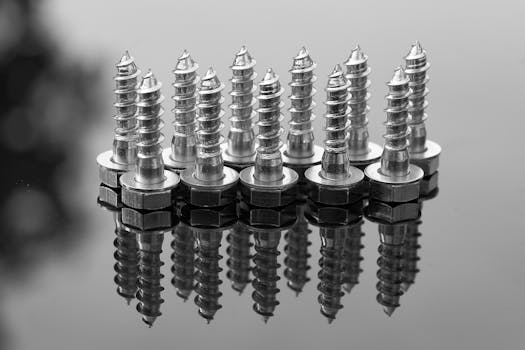
Choose self tapping stainless steel screws based on the material you’re fastening. Sheet metal screws are made for thin metal and have sharp threads that bite without stripping, common in HVAC, gutters, and automotive panels. Pan heads give a low profile where clearance is tight, while hex heads provide more bearing surface and driving torque for structural connections. Tek screws (self drilling screws) are ideal for steel framing and metal roofing because they drill through up to 1/4 inch of steel with no pilot hole; #2, #3, and #5 drill points match different metal thicknesses.
In wood, use stainless wood screws that form their own threads, and choose self tapping stainless steel screws with sharp points and coarse threads for wood‑to‑metal connections. Machine screws are not self tapping and must be used with a tapped hole or nut.
Choosing the Right Screw Sizes and Drive Types
Self tapping stainless steel screws sizes follow a numbering system from #2 (small) to #14 (large), with diameters in between. The most common sizes for self tapping stainless steel screws are #8, #10, and #12. Each size also has a length, measured from under the head to the tip. Lengths range from 1/2 inch to 3 inches or more.
Here is a quick reference for common sizes and their typical applications:
|
Screw Size |
Diameter (inches) |
Typical Use |
|---|---|---|
|
#6 |
0.138 |
Light sheet metal, electronics |
|
#8 |
0.164 |
HVAC ducts, thin metal, plastic |
|
#10 |
0.190 |
Metal roofing, steel studs, small equipment |
|
#12 |
0.216 |
Heavy steel framing, thick gauge metal |
|
#14 |
0.242 |
Structural steel, trailer frames |
Self tapping stainless steel screws offer different drive types as well. Phillips drive is still the most common, but square drive (Robertson) and Torx give better bite and reduce cam-out. For hex head screws, you need a socket or nut driver. For outdoor projects, the drive type can affect speed. Many contractors prefer hex head or Torx for high-torque applications.

Why Stainless Steel Self Tapping Screws Offer Long-Term Value
Upfront cost is higher for stainless than for carbon steel, but total cost of ownership often favors stainless because rusted screws fail, require replacement, and can damage surrounding materials. Stainless steel self tapping screws greatly reduce that risk, especially in coastal environments where zinc‑plated screws can fail in under a year while 316 stainless can last decades. Grade 410 stainless is heat treatable and hard enough for drilling into steel, while 18‑8 stainless offers better corrosion resistance but is softer, making it ideal where you pre‑drill a pilot hole.
Both grades of self tapping stainless steel screws are available in bulk packs at Wholesale Fasteners, with significant price breaks at 100, 500, or 4000 pieces for contractors. DIY homeowners can choose smaller packs of 50 or 100 for projects like fence repair, gutter brackets, or metal shelves—often a single 50‑pack of #10 hex head screws is enough to complete an entire shelf installation.

Frequently Asked Questions
Can self tapping stainless steel screws be used in wood?
Yes, but only if the screw has a sharp point and coarse threads. Most self tapping stainless steel screws designed for metal have finer threads. For wood, look for a wood screw that is also labeled self tapping. Many stainless steel wood screws are thread-forming and work well in softwoods.
What is the difference between self tapping and self drilling screws?
Self tapping screws require a pilot hole before driving. Self drilling screws have a drill-shaped tip that creates its own hole, so no pre-drilling is needed. All self drilling screws are self tapping, but not all self tapping screws are self drilling. For metal, TEK screws are self drilling.
What size pilot hole do I need for a self tapping stainless steel screw?
The pilot hole diameter should be slightly smaller than the screw's root diameter. For #8 screws, use a 1/8 inch hole. For #10 screws, use a 9/64 inch hole. For #12 screws, use a 5/32 inch hole. If the material is soft (thin sheet metal), you may not need any pilot hole at all with a sharp point.
Are hex head screws easier to drive than Phillips?
Hex head screws allow a socket wrench or nut driver, which gives more torque without slipping. They are easier to drive into thick metal because you can apply more force. Phillips drives are more common for light applications where speed matters on assembly lines.
How do I prevent galling on self tapping stainless steel screws?
Galling happens when stainless steel threads lock together due to friction. Use a lubricant like wax or thread cutting oil. Drive at a steady speed without stopping. For critical applications, choose 410 stainless steel which is less prone to galling than 18-8.
Can I use self tapping stainless steel screws in aluminum?
Yes, but with care. Aluminum is softer than steel, so stainless steel screws can over-tighten and strip the threads. Use a sharp point screw and a pilot hole slightly larger than steel requires. Stainless steel and aluminum also have different coefficients of thermal expansion. In applications with wide temperature swings, check for loosening after the first few cycles.
For more details on specific product options, see our selection of self tapping stainless steel screws in various head styles and pack sizes. If you need a kit with multiple sizes, the Fasco SS tapping screw kit is a practical choice. For bulk orders of TEK screws, check our hex washer head TEK screws in 410 stainless.

