
Blog posts
-

Wholesale vs Retail Fastener Pricing: What Contractors Need to Know
Wholesale vs Retail Fastener Pricing: What Contractors Need to Know -


Find pilot hole sizes for common wood screws (#4 to #12) in softwood and hardwood. Quick chart, tips, and FAQs for DIYers and pros.
Drilling a pilot hole before driving a wood screw is one of the simplest ways to prevent splitting, make driving easier, and ensure a strong, lasting joint. But the right pilot hole size depends on the screw gauge, the wood type, and even the screw material. This article provides a practical chart for common wood screw sizes #4 through #12, along with general guidelines that work for most projects. Keep in mind that pilot hole recommendations vary between sources, so treat the chart as a reliable starting point and adjust based on your specific conditions.
A pilot hole removes a small amount of wood so the screw threads can cut cleanly without forcing the wood fibers apart. Without a pilot hole, especially near the end of a board or in dense hardwoods, the screw can split the wood or become so hard to drive that the screw head strips or the shank twists off. A correctly sized pilot hole also reduces the torque required to drive the screw, which prolongs the life of your driver bits and your drill battery.
The ideal pilot hole diameter is roughly equal to the diameter of the screw shank, the unthreaded portion just below the head. The threads need to bite into the wood, so the hole should not be larger than the threaded part. For hardwoods, you typically need to increase the pilot hole size by one step compared to the same screw in softwood. For very small screws in softwood (under #6 gauge), you might skip drilling altogether and use a bradawl to make a starting indentation.
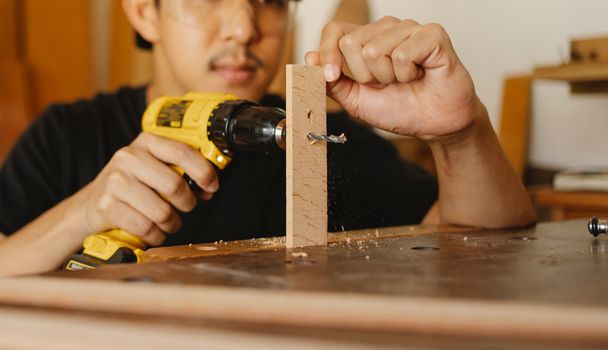
The table below shows pilot hole diameters for #4 through #12 wood screws in softwood and hardwood. These values come from UF‑Tools, a well-known fastener information source. Drill bit sizes are given in both inches and millimeters for convenience.
| Screw Size | Softwood Pilot Hole | Hardwood Pilot Hole |
|---|---|---|
| #4 | 1/16″ (1.5 mm) | 5/64″ (2.0 mm) |
| #6 | 5/64″ (2.0 mm) | 3/32″ (2.5 mm) |
| #8 | 3/32″ (2.5 mm) | 7/64″ (2.8 mm) |
| #10 | 7/64″ (2.8 mm) | 1/8″ (3.0 mm) |
| #12 | 1/8″ (3.0 mm) | 9/64″ (3.5 mm) |
For screw sizes not listed here (such as #2, #3, #5, #7, #9, #11, or #14 and larger), the basic rule of matching the pilot hole to the screw shank diameter works well. A #2 wood screw, for example, uses a tapered pilot bit of 3/32″ in softwood and 5/64″ in hardwood, with a straight bit of 1/16″ for both, according to one manufacturer’s chart.
Pilot hole recommendations are not standardized across all references. For example, another popular DIY site gives slightly different numbers for the same screw sizes:
The differences are small, typically 0.4 to 0.5 mm, and arise from different assumptions about thread depth, bit sharpness, and desired fit. Both sets of numbers will produce a usable pilot hole for most applications. If you prefer a tighter fit for maximum thread engagement, use the smaller hole. If you want an easier drive or are working with brittle wood, go with the larger hole. No single chart is universally correct for every type of wood and every screw brand.
Beyond the screw gauge and wood type, several other factors influence the best pilot hole size. Pay attention to these details to avoid cracks or stripped screws.
The unthreaded portion of the screw (the shank) should fit snugly in the pilot hole. If the shank is larger than the hole, it can act like a wedge and split the wood. If the hole is larger than the threaded portion, the threads will have little bite and the screw will be loose. Measure the shank diameter with a caliper if you are unsure.
Softwoods (pine, fir, cedar) compress more easily, so a smaller pilot hole works. Hardwoods (oak, maple, walnut) resist compression and require a larger hole to relieve pressure. As shown in the chart, stepping up one drill bit size from softwood to hardwood is the standard practice.
For screws longer than about 2 inches (50 mm), the friction along the entire threaded length increases significantly. Drilling a deeper pilot hole, sometimes all the way to the full screw depth, reduces driving torque and the risk of the screw breaking. In very long screws, you may also need to drill a clearance hole for the shank part of the screw, stopping the pilot hole only for the threaded portion.
Fragile screw materials like brass and stainless steel are more prone to snapping under torsional stress. For these screws, it is wise to use a slightly larger pilot hole than you would for a steel screw of the same gauge. If you are driving brass screws, an even more reliable method is to pre‑cut the threads by driving a steel screw of the same size first, then removing it and inserting the brass screw. This greatly reduces the chance of breakage.
Some fastener suppliers distinguish between pilot holes drilled with a tapered bit and those drilled with a straight bit. A tapered bit creates a hole that widens slightly toward the surface, which can help accommodate the screw shank while leaving a narrower bottom for thread engagement. Straight bits produce a uniform diameter along the entire depth. Most general‑purpose charts (including the one above) give a single diameter without specifying bit type. If you use a tapered bit, check the bit’s markings or the manufacturer’s instructions for the equivalent straight‑bit size.
Yes, for very small screws (under #6) in softwood, you can sometimes skip drilling and just use a bradawl or even drive the screw directly. However, for screws size #6 and larger, especially near the edge of a board or in hardwood, a pilot hole is strongly recommended to prevent splitting and make driving easier.
A pilot hole that is too small will make the screw very hard to drive. The threads will have to compress the wood excessively, increasing the risk of breaking the screw, stripping the head, or splitting the wood. If you encounter resistance early, stop and enlarge the hole with the next size up bit.
If the pilot hole is larger than the threaded portion of the screw, the threads will not have enough wood to grip. The screw may turn freely without tightening, or it may pull out easily under load. The hole should be no larger than the screw shank diameter.
There is no single official standard for pilot hole sizes. Different manufacturers, tool companies, and DIY websites base their recommendations on different assumptions about wood density, bit sharpness, screw thread design, and desired fit. The differences are usually small (0.2–0.5 mm) and both values will work in practice. Choose a reliable chart and adjust as needed for your specific wood and screw.
Yes, and you should drill a slightly larger pilot hole than you would for a steel screw of the same size. Stainless steel and brass are more brittle and prone to snapping under torque. For brass screws, a proven technique is to first drive a steel screw of the same size to cut the threads, then remove it and drive the brass screw. This greatly reduces breakage risk.

