
Blog posts
-

Wholesale vs Retail Fastener Pricing: What Contractors Need to Know
Wholesale vs Retail Fastener Pricing: What Contractors Need to Know -


Learn how to install wedge anchors in concrete correctly. Step-by-step instructions, drill depth guidelines, torque tips, and common mistakes.
Wedge anchors are a reliable fastening solution for attaching structural supports, equipment, railings, and machinery bases to concrete. As torque-controlled expansion anchors, they transfer the load through friction against the walls of the drilled hole. This step-by-step guide covers the correct installation process, from selecting the right tools to tightening the nut to the proper torque. Whether you are a contractor, handyman, or homeowner, following these steps will help you achieve a secure and lasting hold.
Wedge anchors consist of a threaded rod with a cone-shaped end (often called the bullnose or clipped end) and an expansion clip. When the nut is tightened, the cone is pulled into the clip, forcing it outward against the concrete. This creates a strong mechanical bond. Common materials for wedge anchors include carbon steel with zinc or hot-dipped galvanized coating, as well as stainless steel grades 303/304 and 316. The larger the anchor diameter, the higher its holding value. Wedge anchors are not designed to be removed once installed, so careful placement is essential.
Before you start, gather the following items:
The drill bit must be the same diameter as the wedge anchor. Using a bit that is too small or too large will compromise the anchor’s expansion and holding strength.

Measure and mark the exact positions where each anchor will go. Use a pencil or marker to indicate the center point. Double-check your layout to ensure alignment with the item you are fastening, such as a base plate, bracket, or sill plate. Accurate marking prevents the need for additional holes in the concrete.
Drill a hole at each mark using a hammer drill and the correctly sized carbide-tipped bit. The hole depth must be at least 1/2 inch deeper than the required embedment depth of the anchor. Refer to the embedment depth table below for your anchor diameter. Drill straight and avoid wobbling, which can enlarge the hole and reduce the anchor’s grip.
Remove all dust and debris from the hole. This is a critical step. Use compressed air to blow out the dust, a vacuum to suction it out, or a stiff brush to scrub the inside walls. Repeat the cleaning until the hole is free of loose material. A dirty hole prevents the expansion clip from making full contact with the concrete, reducing holding strength.
Place the wedge anchor into the hole with the clipped or bullnose end first. The nut and washer should be on the threaded end facing outward. Tap the top of the anchor gently with a hammer until the nut and washer are flush with the surface of the concrete. Do not damage the threads during this step. The anchor must be fully seated to achieve the correct embedment depth.
Use a socket wrench or torque wrench to tighten the nut to the manufacturer’s recommended torque specification. Over-tightening can damage the anchor or the concrete, while under-tightening may not fully expand the clip. Follow the torque values provided by the anchor manufacturer for your specific diameter and material. After tightening, the anchor is securely installed and ready for loading.
Embedment depth is the portion of the wedge anchor that sits inside the concrete. The minimum embedment depth depends on the anchor diameter. The drilled hole must be 1/2 inch deeper than this embedment depth to allow space for debris and proper expansion.
| Anchor Diameter | Minimum Embedment Depth | Minimum Drill Hole Depth |
|---|---|---|
| 3/8 inch | 1-1/2 inches | 2 inches |
| 1/2 inch | 2-1/4 inches | 2-3/4 inches |
| 5/8 inch | 2-3/4 inches | 3-1/4 inches |
| 3/4 inch | 3-1/4 inches | 3-3/4 inches |
| 7/8 inch | 3-7/8 inches | 4-3/8 inches |
| 1 inch | 4-1/2 inches | 5 inches |
| 1-1/4 inches | 5-1/2 inches | 6 inches |
These values are based on standard manufacturer guidelines. Always check the product specifications for the anchors you have purchased, as some may have different requirements.
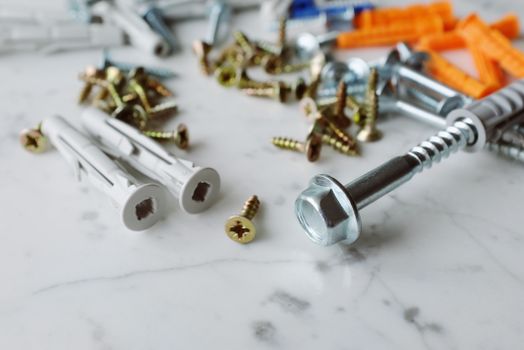
Wedge anchors are available in several materials to suit different environments. Carbon steel anchors with a zinc or hot-dipped galvanized coating are cost-effective for indoor or dry applications. Stainless steel grade 303 or 304 offers good corrosion resistance for most outdoor and damp conditions. For marine or highly corrosive environments, stainless steel 316 provides the best protection. Selecting the right material extends the life of the installation.
Sizes range from small diameters like 3/8 inch to large diameters like 1-1/4 inches. Larger diameters provide higher holding values, making them suitable for heavy loads. The anchor length must be enough to pass through the fixture, plus the embedment depth, plus a small amount for the nut and washer.
If you are comparing wedge anchors to sleeve anchors, note that wedge anchors generally offer much higher ultimate and allowable load capacities. Both types can be used in concrete, brick, and block, but wedge anchors are the preferred choice for heavy-duty fastening tasks such as structural supports and machinery bases. Sleeve anchors may be more suitable for lighter loads or when installation into hollow masonry is needed. For concrete applications requiring maximum strength, wedge anchors are the better option.
Follow these tips to avoid common mistakes:
By following these guidelines, you can install wedge anchors with confidence and reliability.
Wedge anchors are primarily designed for concrete. They can be used in solid brick or solid block, but the holding values will be different from concrete. For hollow block or brick, sleeve anchors are a better choice because they expand more evenly. Always check the manufacturer’s recommendations for the specific base material you are fastening into.
Torque specifications vary by anchor diameter, material, and manufacturer. The research pack does not provide specific torque values. You should consult the installation instructions that come with the wedge anchors you purchased. Using a torque wrench ensures you apply the correct amount of force without damaging the anchor or the concrete.
No. Wedge anchors are not designed to be removed once they are tightened. The expansion clip locks into the concrete, and attempting to pull the anchor out will likely damage the hole or the anchor itself. If you need a removable fastener, consider a different type of concrete anchor, such as a drop-in anchor or a sleeve anchor with a removable bolt.
The drill bit must be the same diameter as the wedge anchor and should meet ANSI Standard B212.15 for carbide-tipped bits. For example, a 1/2-inch wedge anchor requires a 1/2-inch carbide-tipped bit. Using a bit that is too small makes insertion difficult, while a bit that is too large prevents the expansion clip from gripping properly.
Drill the hole at least 1/2 inch deeper than the minimum embedment depth required for your anchor diameter. This extra depth allows for any debris at the bottom of the hole and ensures the anchor can be fully seated. Refer to the embedment depth table in this article for the recommended drill hole depths for each anchor size.

