
Blog posts
-

Wholesale vs Retail Fastener Pricing: What Contractors Need to Know
Wholesale vs Retail Fastener Pricing: What Contractors Need to Know -


Learn the common concrete anchor types, load capacities, and installation basics for 2026. Mechanical, adhesive, and masonry anchors covered.
Concrete anchors are essential for securing fixtures, equipment, and structural components to concrete, masonry, or block surfaces. Choosing the right anchor and installing it correctly affects safety and long-term performance. This guide covers the most common concrete anchor types, their load ranges, and key installation considerations for 2026.
Mechanical expansion anchors rely on friction against the sides of the drilled hole. They are set by hammering a sleeve or by tightening a nut or screw that expands the anchor body. These anchors provide quick installation and can be loaded immediately, but they impart expansion stress on the base material. Common mechanical types include wedge anchors, nail-drive anchors, and sleeve anchors.
Wedge anchors are designed for medium to heavy-duty fastening in solid concrete. The Trubolt wedge anchor, for example, is available in zinc-plated or stainless steel and offers ultimate pullout capacity up to 26,540 lbs in 4,000 psi concrete when properly installed. For applications requiring resistance to seismic forces, the Trubolt+ seismic wedge anchor is cracked-concrete rated (4,980 lbs at 1/2 inch diameter in 2,500 psi concrete) and meets ACI 318 ductility requirements for all seismic zones A through F. Wedge anchors require a properly sized pilot hole and are set by tightening the nut with a wrench.
Nail-drive anchors, also called hammer-set anchors, are installed by driving the anchor directly into a pre-drilled hole with a hammer. They are rated for light to medium duty. In 4,000 psi concrete, ultimate tension ranges from 590 to 1,200 lbs, and ultimate shear ranges from 380 to 1,160 lbs. These anchors are ideal for attaching furring strips, electrical boxes, and other light fixtures to concrete or masonry. No special tools are needed beyond a hammer and a correctly sized drill bit.
Drop-in anchors (such as the Multi-Set II) are internally threaded expansion anchors used primarily for overhead applications. After drilling a hole of specified diameter and depth, the anchor is inserted flush with the surface, then expanded using a setting tool. They accept machine screws or threaded rod and are well suited for suspended ceilings, conduit, and pipe supports.
Lag shields are expansion sleeves that accept coarse-thread lag screws. When the lag screw is tightened, the shield expands against the hole walls. These are common for fastening wood or metal to concrete in medium-duty applications. The pilot hole must match the shield diameter, and the screw length must account for the shield and the thickness of the fixture.
Dynabolt and similar sleeve anchors consist of a threaded stud with an expanding sleeve. They are versatile and work in solid concrete, brick, and block. Setting is done by tightening the nut, which pulls the stud up and expands the sleeve. Sleeve anchors are available in multiple head styles (hex, flat, round) and lengths.
Adhesive anchors bond a threaded rod or rebar into the concrete using a chemical resin. They provide high pullout strength without expansion stress, making them suitable for cracked or crumbling concrete and for close-to-edge installations. However, they require controlled cure times and are temperature sensitive. The main adhesive types are polyester, epoxy acrylate, acrylic, and epoxy.
Adhesive anchor cure times and service temperatures vary significantly by product. Polyester resins cure in 10 to 30 minutes at 68°F and have a service temperature up to 176°F. Epoxy acrylate cures in 15 to 45 minutes and serves up to 250°F. Acrylic resins require 45 to 60 minutes and are rated to 180°F. Epoxy formulations have the longest cure times, 6 to 72 hours, and service temperatures between 125°F and 200°F. Always consult manufacturer specifications for exact cure times and temperature limits.
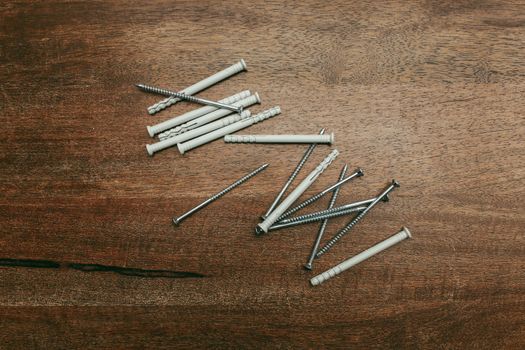
Concrete screws, often known by the brand Tapcon, have coarse threads that cut into a pre-drilled pilot hole. They are available for wall, floor, and overhead use and are rated light to medium duty. In 4,000 psi concrete, ultimate tension ranges from 620 to 2,260 lbs, and ultimate shear from 680 to 1,590 lbs. Concrete screws offer the advantage of removability, they can be unscrewed and reused in some applications. Installation requires a hammer drill, a correctly sized carbide tip bit, and a driver (torque-controlled is recommended).
Cast-in-place anchors are embedded into concrete before it sets. They include headed studs, bent bar anchors, and anchor plates. These are used in precast concrete or when planning for future attachments. Because they become part of the concrete mass, they can achieve very high load capacities, but their location must be determined before pouring. Once concrete hardens, they cannot be moved.
Anchors designed for brick, block, or hollow masonry differ from solid concrete anchors. Some mechanical expansion anchors work in masonry if the base material is dense enough, but often a special anchor such as a sleeve anchor or a toggle bolt is required for hollow walls. The same pilot hole preparation rules apply, but the installer must verify that the anchor is rated for the specific base material.

Manufacturers recommend that loads applied to an anchor should not exceed 25 percent of the ultimate load capacity. For example, a concrete screw with an ultimate tension of 2,260 lbs would have a safe working load of roughly 565 lbs. Ultimate loads are determined by testing to standards such as ASTM E 488, which specifies hole diameter, loading procedures, concrete strength, and spacing. Always base your design on the published allowable load, not the ultimate strength.
| Anchor Type | Duty Rating | Ultimate Tension (4,000 psi concrete) | Ultimate Shear (4,000 psi concrete) |
|---|---|---|---|
| Nail-drive (hammer-set) | Light to medium | 590‑1,200 lbs | 380‑1,160 lbs |
| Concrete screws (Tapcon) | Light to medium | 620‑2,260 lbs | 680‑1,590 lbs |
| Wedge anchor (Trubolt, 1/2") | Heavy | Up to 26,540 lbs | Per published data |
| Adhesive anchor (epoxy) | Heavy | Varies by product | Varies by product |
Proper installation begins with selecting the correct drill bit size. ANSI B 212.15-1994 defines drill tolerances for maximum holding power, matching drill bits to anchor dimensions. The pilot hole must reach the specific depth and diameter required for the anchor type. Depth stops or tape on the drill bit help prevent over-drilling.
The hole must be free of dust and debris before inserting any anchor. For adhesive anchors, thorough cleaning with a brush and compressed air or a vacuum is critical to bond integrity. Mechanical anchors also perform best in clean holes; dust can reduce friction and lower pullout strength.
For concrete screws (Tapcon), the pilot hole should be deeper than the screw length. Drive the screw until the head contacts the fixture; do not overtighten, as this can strip the threads in the concrete. For wedge anchors, the nut should be tightened to the torque specified by the manufacturer, tighten until the anchor is snug plus a few turns, but never exceed the torque that could crack the concrete.
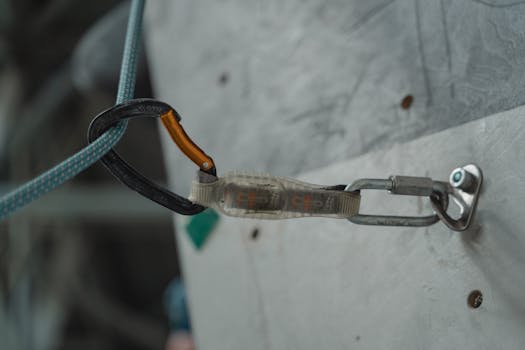
Select the anchor type based on the base material, the load requirements, and the working conditions. For solid concrete in good condition with heavy loads, wedge anchors or adhesive anchors are reliable choices. For light to medium duty and where speed matters, nail-drive or concrete screws work well. Seismic or cracked concrete applications demand anchors specifically rated for those conditions, such as the Trubolt+ seismic wedge anchor.
If the concrete is old, crumbling, or prone to cracking, adhesive anchors avoid expansion stress and provide a secure hold. For temporary attachments or where removal may be needed, concrete screws allow the anchor to be unscrewed. Always refer to the manufacturer's instructions for drill size, embedment depth, and installation torque.
Mechanical anchors expand against the hole walls and can be loaded immediately. Adhesive anchors use a chemical bond and require cure time before loading, but they create no expansion stress and often provide higher pullout strength. Choose mechanical when speed is needed; choose adhesive when the concrete is weak, cracked, or when close-edge placement is required.
Drill depth must match the embedment depth specified for the anchor. For wedge anchors, the hole is typically at least 1/2 inch deeper than the embedment to allow room for dust and debris. For concrete screws, the hole should be at least 1/4 inch deeper than the screw length. Always check the product instructions for exact depth requirements.
Some anchors are rated for masonry. Nail-drive anchors and sleeve anchors work in brick and solid block if the material is dense enough. For hollow block, use sleeve anchors or toggle bolts designed for hollow base materials. Always verify that the anchor is listed for the specific masonry type.
Manufacturers recommend that the actual load on an anchor not exceed 25% of its tested ultimate load capacity. This factor of safety accounts for variables such as installation quality, concrete variability, and dynamic loads. For design purposes, use the allowable load published by the manufacturer, not the ultimate figure.
Most concrete anchor installations require a hammer drill with a carbide-tipped masonry bit to create the pilot hole. Standard drills without hammer action can handle very soft masonry but will struggle in dense concrete. A hammer drill ensures accurate hole size and reduces installation time.

