
Blog posts
-

Wholesale vs Retail Fastener Pricing: What Contractors Need to Know
Wholesale vs Retail Fastener Pricing: What Contractors Need to Know -


Learn when to use 410 stainless steel screws in construction, including metal roofing and self-drilling applications, and how they compare to 304.
Choosing the right fastener for a construction project involves balancing strength, corrosion resistance, and cost. 410 stainless steel screws offer a unique combination of hardness and affordability that makes them a practical choice for many building applications. These screws contain 11 to 13 percent chromium and no nickel, giving them a distinct set of properties compared to other stainless steel grades. Understanding when and where to use 410 stainless steel screws helps contractors, hardware stores, and DIY buyers make informed purchasing decisions that keep projects on budget without sacrificing performance.
410 stainless steel is a martensitic grade that provides high strength and wear resistance. Unlike austenitic grades such as 304, 410 is magnetic, which allows it to be used with standard socket pockets and magnetic bit holders. Many 410 stainless steel screws are designed as self-drilling screws, often called TEK screws, which eliminate the need for pre-drilling in most metal-to-metal applications. This self-drilling capability speeds up installation on job sites and reduces labor costs. The combination of hardness and magnetic properties makes 410 screws a reliable option for fastening tasks where strength and ease of installation are priorities.
The composition of 410 stainless steel directly affects its performance in construction. With 11 to 13 percent chromium and no nickel, the material is harder and more heat-resistant than 304 stainless steel. However, the lower chromium content means 410 stainless steel has lower corrosion resistance than 304. This trade-off makes 410 screws better suited for dry, indoor, or moderately exposed environments rather than harsh coastal or marine settings. The hardness of 410 screws also allows them to drill through steel and other metals without dulling quickly, which is a significant advantage in metal roofing and siding installations.
Cost is another important factor. 410 stainless steel screws are more cost-effective than 304 stainless steel screws. For projects where corrosion exposure is limited and hardness is critical, paying less per screw without compromising strength makes 410 a practical choice. The heat resistance of 410 stainless steel also makes it suitable for applications near heat sources, such as metal roof panels that can experience high temperatures in direct sunlight.
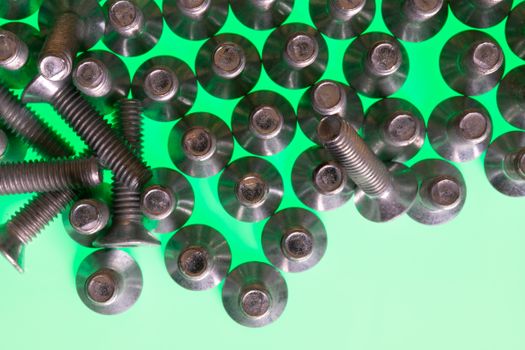
Metal roofing projects in areas with low to moderate humidity, away from salt spray, benefit from 410 stainless steel screws. The screws provide the hardness needed to penetrate steel roof panels and structural supports, while their corrosion resistance is sufficient for most inland environments. Contractors frequently choose 410 screws for barns, sheds, warehouses, and commercial buildings where the roof is not exposed to aggressive chemicals or constant moisture. In these settings, the cost savings over 304 can be substantial.
Self-drilling 410 stainless steel screws, especially those with hex washer heads, are designed for fastening metal sheets to metal substructures. The high-strength hex washer head provides a secure bearing surface, and the self-drilling point drills through steel up to a certain thickness without requiring a pilot hole. These screws deliver superior durability, corrosion resistance, and drilling capability for metal-to-metal applications. Common uses include attaching metal siding to steel framing, fastening steel roof panels to purlins, and assembling metal ductwork and equipment enclosures.
For interior construction where moisture is minimal, 410 stainless steel screws are a reliable and economical choice. They work well for fastening metal studs, drywall tracks, electrical boxes, and HVAC components. The strength of 410 screws ensures secure connections in structural framing, and the magnetic property simplifies handling with power tools. In addition, 410 stainless steel is used in cutlery, dental and surgical instruments, nozzles, valve parts, hardened steel balls and seats for oil well pumps, separating screens and strainers, springs, shears, and wear surfaces. This versatility reflects the material’s ability to withstand abrasion and maintain hardness in demanding roles.
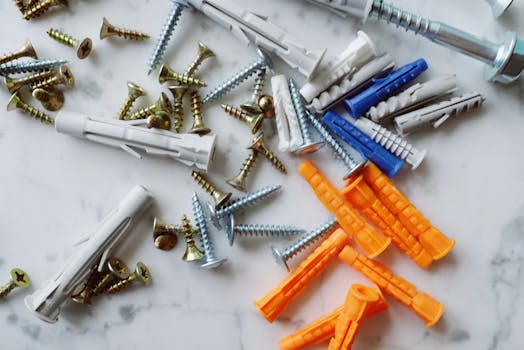
The table below summarizes the key differences between 410 and 304 stainless steel screws to help buyers decide which grade fits their construction project.
| Property | 410 Stainless Steel | 304 Stainless Steel |
|---|---|---|
| Chromium content | 11-13% | 18-20% |
| Nickel content | None | 8-10% |
| Corrosion resistance | Lower (suitable for dry/moderate environments) | Higher (excellent for coastal/high-corrosion environments) |
| Hardness | Harder | Less hard |
| Heat resistance | More heat-resistant | Less heat-resistant |
| Magnetic | Yes | No (non-magnetic) |
| Cost | More cost-effective | More expensive |
| Ideal applications | Metal roofing (inland), metal-to-metal fastening, indoor framing | Coastal roofing, outdoor exposed fixtures, food processing equipment |
This comparison shows that 410 screws are not a direct substitute for 304 in every situation. When corrosion resistance is the top priority, 304 should be used. When hardness, heat resistance, and cost savings are more important and exposure is mild, 410 is the better choice.
410 stainless steel screws will rust because their low chromium content gives relatively poor anti-rust performance. They are not recommended for marine environments, coastal construction, or any application where the screws will be exposed to salt spray, deicing chemicals, or persistent moisture. Outdoor decks, pool enclosures, and structures near the ocean require a stainless steel grade with higher corrosion resistance, such as 304 or 316. Additionally, 410 screws should not be used in environments where the fastener must remain bright and free of surface rust for aesthetic reasons. If the project demands a screw that will not corrode under harsh conditions, select 304 instead.
Yes. 410 stainless steel screws can rust because their chromium content is only 11 to 13 percent, which provides lower corrosion resistance than other stainless grades. In dry or indoor settings rust is unlikely, but exposure to moisture, chemicals, or salt can cause surface corrosion.
Yes, 410 stainless steel is magnetic. This property makes the screws compatible with magnetic bit holders and standard socket pockets, which can simplify installation and improve tool retention on the job site.
410 screws can be used outdoors in low-corrosion environments away from salt spray and persistent moisture. For outdoor projects near the coast or in areas with heavy rain and humidity, a higher chromium grade like 304 is strongly recommended to prevent rust.
410 stainless steel screws are harder than 304 screws and offer good strength for many structural metal-to-metal connections. Their self-drilling capability and shear strength make them suitable for attaching metal roofing and siding to steel supports, but critical load-bearing applications should always be verified with engineering specifications.
Consider the environment. If the project is inland, dry, or moderate and requires hardness and cost efficiency, 410 is a good choice. If the installation is coastal, wet, or requires maximum corrosion resistance, choose 304. For most metal roofing and indoor metal fastening, 410 performs well and saves money.
By understanding the strengths and limits of 410 stainless steel screws, construction professionals and homeowners can select fasteners that match the demands of each job. Whether you are fastening metal roofing on a warehouse or assembling interior steel framing, 410 stainless steel screws offer a hard, heat-resistant, and cost-effective option when corrosion risk is low. Always verify that the specific screw meets the requirements of your building code and application before purchase.

